Evelynne R. Scott-McFarlane

Evelynne R. Scott-McFarlane is a BABCP-accredited CBT therapist specialising in OCD and anxiety disorders. She delivers evidence-based CBT and ERP in accordance with NICE guidelines for OCD treatment, and writes to help people understand what they're experiencing before seeking professional support

A person sitting in quiet contemplation, seen from behind against soft natural light, representing the uncertainty and distress of health anxiety or OCD

Do I Have Health Anxiety or OCD? A Therapist Explains

Health anxiety is a persistent, excessive worry about having or developing a serious illness, which continues despite medical reassurance. OCD is a condition involving unwanted, distressing intrusive thoughts and compulsive rituals performed to neutralise them. When OCD’s intrusive thoughts centre on illness or contamination, the two conditions can look very similar on the surface. They […]

Do I Have Health Anxiety or OCD? A Therapist Explains Read More »

A person washing their hands carefully at a white sink, illustrating the compulsive handwashing behaviour common in contamination OCD

What Is Contamination OCD? Symptoms, Triggers and How CBT Helps

Contamination OCD is a subtype of obsessive-compulsive disorder in which a person experiences persistent, unwanted thoughts about contamination, from germs, illness, dirt, or chemicals, and responds with compulsive behaviours designed to neutralise that fear. These behaviours provide only brief relief, and over time they make the anxiety worse, not better OCD affects an estimated 750,000

What Is Contamination OCD? Symptoms, Triggers and How CBT Helps Read More »

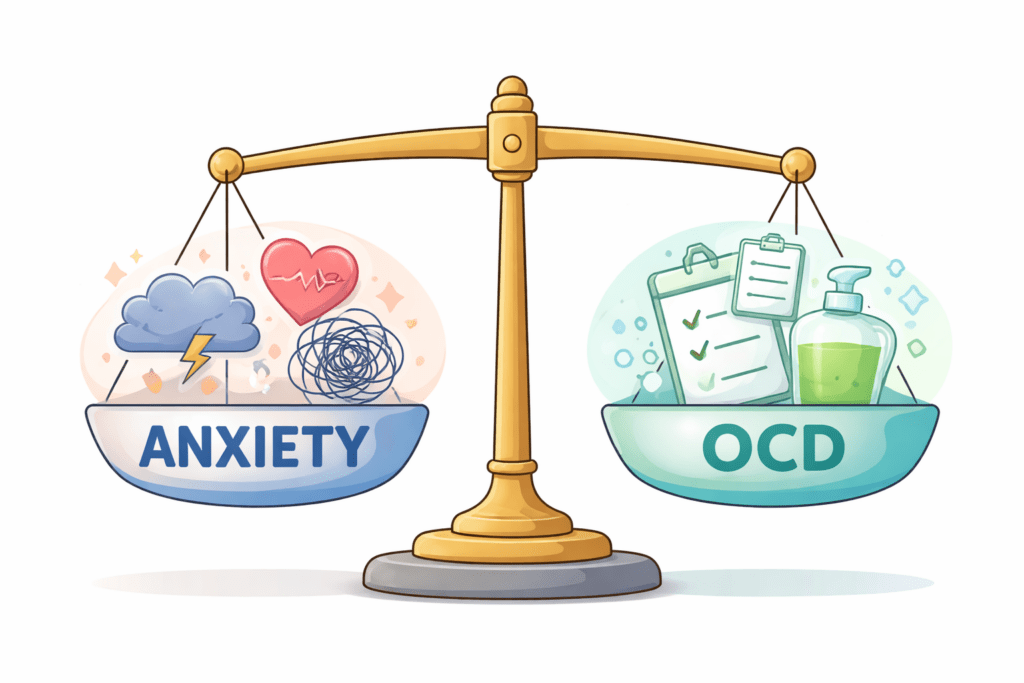
illustration showing OCD on one side, and anxiety on the other, representing the differences between disorders

Do I have OCD or Anxiety? Key Differences Explained

OCD and anxiety share a lot of surface features, but they work through different mechanisms and respond to different treatments. Anxiety tends to involve persistent worry about real-world situations. OCD centres on unwanted intrusive thoughts followed by compulsions, and it’s the compulsion-relief cycle, not the worry itself, that keeps the problem going. This is one

Do I have OCD or Anxiety? Key Differences Explained Read More »

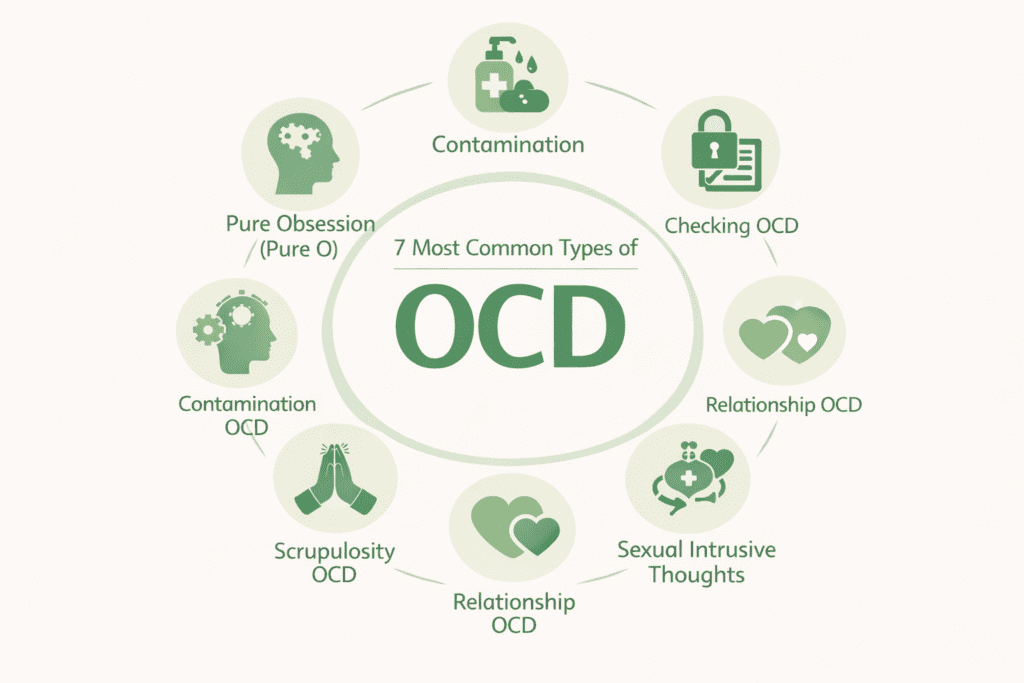
Types of OCD: The 7 Most Common Forms Explained

OCD takes many different forms. The type of intrusive thought at the centre varies between people, but the cycle is always the same: an unwanted thought triggers anxiety, a compulsion temporarily relieves it, and the doubt comes back stronger than before. Recognising the specific subtype matters because each responds best to a slightly different clinical

Types of OCD: The 7 Most Common Forms Explained Read More »

A woman sits pensively, embodying themes of isolation and introspection.

Are Intrusive Thoughts Normal? What the Research Shows

Intrusive thoughts are unwanted thoughts, images, or urges that appear without warning and feel distressing or out of character. Research shows they’re far more common than most people realise: 94% of people experience them. The difference between a normal intrusive thought and a clinical problem isn’t the content of the thought, but how you respond

Are Intrusive Thoughts Normal? What the Research Shows Read More »

Close-up of a hand on a door lock, representing the repetitive checking cycle in OCD

Checking OCD: Why You Can’t Stop and What Helps

Checking OCD is a form of OCD where the main compulsion is repeatedly checking things, such as locks, appliances, or messages, to reduce doubt or dread. The checking provides brief relief, but that relief reinforces the cycle and makes the urge return stronger. Over time, the checking tends to expand and demands more certainty before

Checking OCD: Why You Can’t Stop and What Helps Read More »

Red typewriter typing the word STOP, symbolising the urge to suppress intrusive thoughts — a pattern that backfires in OCD and anxiety

How to Stop Intrusive Thoughts, Without Fighting Them

Trying to stop an intrusive thought by force tends to make it return more often. This is called ironic process theory, which is why advice to “just don’t think about it” rarely works. The approach that actually helps focuses not on eliminating intrusive thoughts but on changing how you relate to them. If you’ve been

How to Stop Intrusive Thoughts, Without Fighting Them Read More »

Worried woman holding her head indoors, expressing stress linked to OCD checking behaviours

Intrusive Thoughts Explained by a CBT Therapist

Intrusive thoughts feel so real partly because the brain processes unwanted thoughts and genuine intentions through similar pathways, making them hard to tell apart. This is known as thought-action fusion. In reality, the content of an intrusive thought says very little about your character or what you actually want. Intrusive thoughts can feel confusing, distressing,

Intrusive Thoughts Explained by a CBT Therapist Read More »

Scroll to Top
Privacy Overview

This website uses cookies so that we can provide you with the best user experience possible. Cookie information is stored in your browser and performs functions such as recognising you when you return to our website and helping our team to understand which sections of the website you find most interesting and useful.