
PANIC DISORDER - ONLINE CBT
CBT for panic disorder: treating the fear of fear itself
Panic attacks are frightening. But panic disorder is often maintained less by the attacks themselves and more by what happens afterwards, the vigilance, the avoidance, the fear of having another. CBT targets that cycle directly.
This page covers
What panic disorder is
What sessions look like
Frequently asked questions
UNDERSTANDING PANIC DISORDER
What panic disorder is — and why it's not just "having panic attacks"
Panic attacks are sudden, intense surges of fear that come with physical symptoms, racing heart, dizziness, shortness of breath, chest tightness, a feeling of unreality or that something terrible is about to happen. They're frightening, but they're not dangerous. No one has ever died from a panic attack.
Panic disorder is when the panic attacks themselves become the problem, when you start to worry excessively about having another one, change your behaviour to avoid triggers, or spend significant energy monitoring your body for early warning signs. This is the "fear of fear" cycle.
The cycle is self-reinforcing: anxiety about panic increases bodily arousal, which produces the sensations that trigger more anxiety, which increases arousal further. Avoidance of situations where attacks have happened provides short-term relief but confirms to your brain that those situations were dangerous.
A note on panic attacks and cardiac symptoms: If you're experiencing chest pain or other physical symptoms you haven't had checked by a doctor, please get those assessed first. CBT is highly effective for panic, but it's appropriate once significant medical causes have been ruled out.
Common signs and patterns in panic disorder
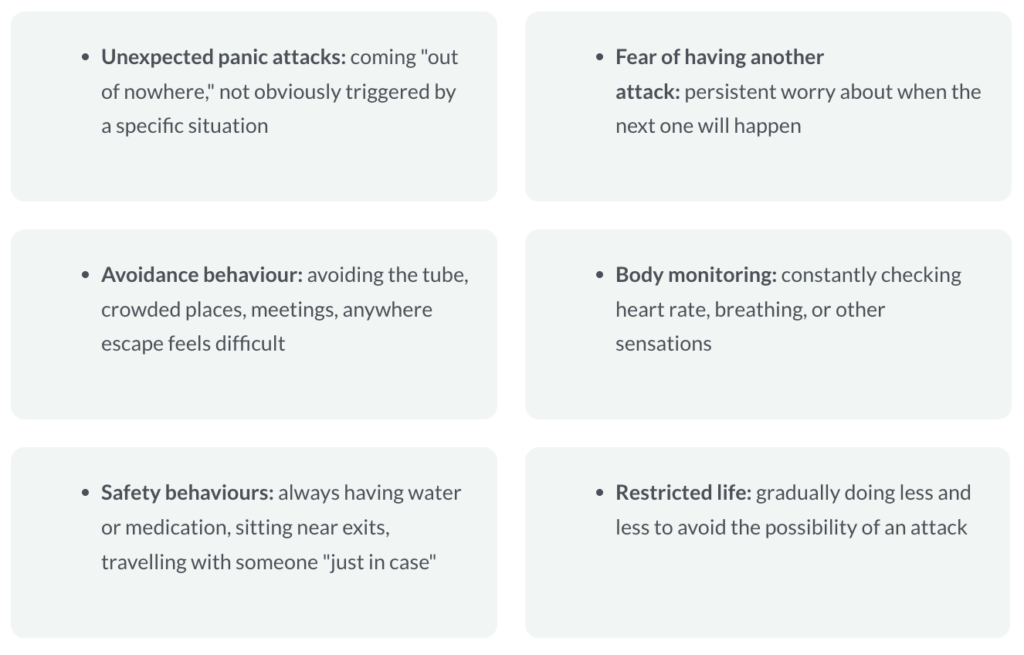
- Unexpected panic attacks: coming "out of nowhere," not obviously triggered by a specific situation
- Fear of having another attack: persistent worry about when the next one will happen
- Avoidance behaviour: avoiding the tube, crowded places, meetings, anywhere escape feels difficult
- Body monitoring: constantly checking heart rate, breathing, or other sensations
- Safety behaviours: always having water or medication, sitting near exits, travelling with someone "just in case"
- Restricted life: gradually doing less and less to avoid the possibility of an attack
TREATMENT APPROACH
How CBT treats panic disorder
The CBT model of panic disorder (developed primarily by David Clark in the 1980s) is one of the most well-evidenced psychological treatment models we have. It's the approach recommended by NICE for panic disorder, and produces substantial improvement in most people who complete it.
The core targets are: (1) the catastrophic misinterpretations of bodily sensations ("my heart is racing → I'm having a heart attack"), and (2) the behaviours that maintain those interpretations → avoidance, safety behaviours, and body checking.
Crucially, we don't just ask you to face feared situations and hope for the best. We do specific experiments to directly test the beliefs driving the panic, in a controlled and graduated way.

Understanding your panic cycle
We work out what's driving your panic specifically, what sensations trigger it, what you're interpreting those sensations to mean, and what behaviours are keeping the cycle going.

Psychoeducation about panic
Understanding what actually causes panic sensations (the body's threat response, not illness or danger) is itself therapeutic. The symptoms are real, their cause isn't what the anxious mind suggests.

Challenging catastrophic interpretations
Using behavioural experiments to test the beliefs that maintain panic. "If I let my heart race without doing anything about it, something terrible will happen", let's actually test that.

Dropping safety behaviours & facing avoided situations
Towards the end of treatment, we focus on equipping you to manage future wobbles independently. You'll understand your OCD well enough to know what to do when it flares.
WHAT TO EXPECT
What working together looks like
Panic disorder tends to respond quite well to CBT, often faster than other anxiety difficulties. Many people see significant improvement within 8–12 sessions. I'll give you a more specific estimate based on your situation.
Sessions are 60 minutes online. There will be work to do between sessions, experiments to try, situations to face, behaviours to change. This is where the real progress happens.
If your panic disorder has led to significant avoidance (agoraphobia), we'd work on that as part of treatment too. The avoidance is part of the same problem.
COMMON QUESTIONS
Panic disorder — what people ask
ALSO WORKING WITH:
A free 15-minute consultation to understand your situation and see whether we'd be a good fit. No obligation, no pressure.
BABCP Accredited · Online across London & the UK · Sessions £100