
OCD TREATMENT - ONLINE CBT
CBT for OCD: understanding the cycle and breaking it
OCD is treatable. CBT with Exposure and Response Prevention (ERP) is recommended by NICE as the first-line treatment. I offer specialist OCD therapy online, working with adults across London and the UK.
This page covers
What OCD actually is
Common signs and patterns
How CBT/ERP treats OCD
What sessions look like
How long treatment takes
Frequently asked questions
UNDERSTANDING OCD
What OCD actually is — and what it isn't
OCD (Obsessive-Compulsive Disorder) is often misrepresented. It's not about being tidy or liking things a certain way. It's a cycle of intrusive, distressing thoughts (obsessions) followed by compulsive attempts to reduce that distress → behaviours or mental acts that provide temporary relief but make the problem worse over time.
The obsessions feel important and urgent. They often go against your values, which is precisely why they cause so much distress. Common OCD themes include contamination fears, fears of harming others, fears about sexuality or relationships, fears of acting immorally, and "just right" feelings that something is wrong.
The compulsions; checking, washing, seeking reassurance, mental reviewing, avoidance, reduce anxiety short-term but reinforce the cycle. Each time you respond to a thought with a compulsion, you're teaching your brain that the thought required a response. That's what CBT targets.
Important: OCD themes can be disturbing, and people with OCD are often deeply ashamed of the content of their thoughts. They don't reflect who you are or what you want. They're a symptom. I've heard a lot, nothing will surprise me.
If you want a fuller picture of how OCD therapy works before getting in touch, I've written A complete guide to OCD therapy in the UK covering everything from what treatment involves to how long it takes.
Common signs of OCD
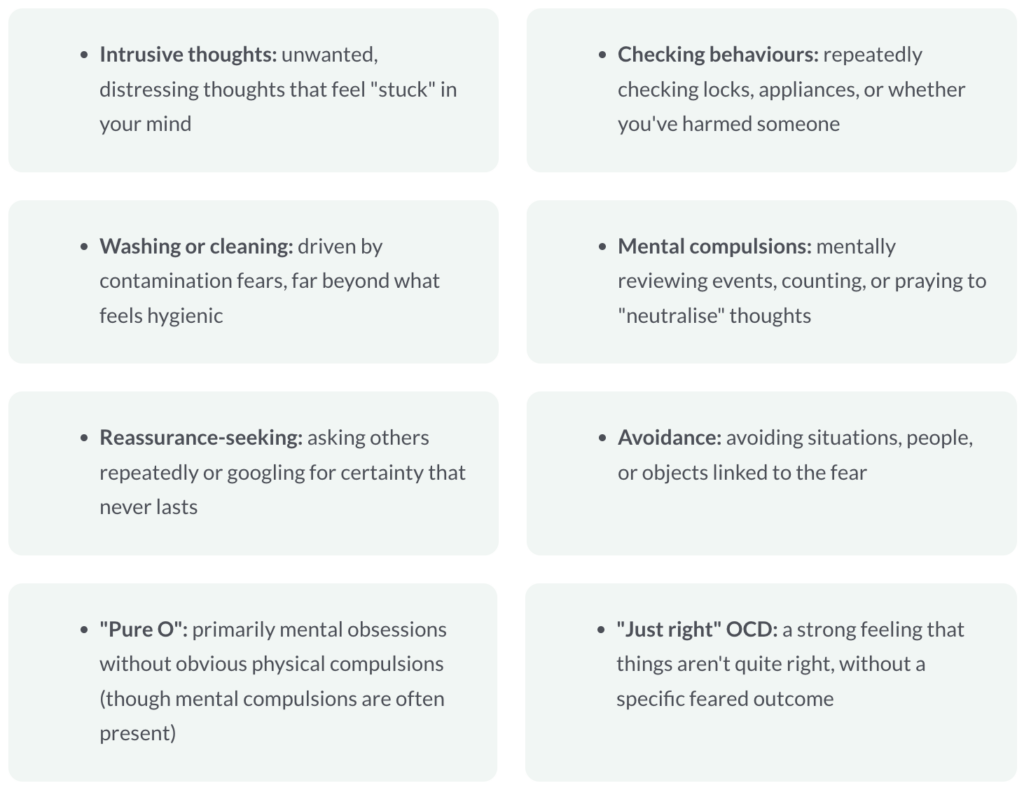
OCD presents differently in different people, but these patterns often appear:
- Intrusive thoughts: unwanted, distressing thoughts that feel "stuck" in your mind
- Checking behaviours: repeatedly checking locks, appliances, or whether you've harmed someone
- Washing or cleaning: driven by contamination fears, far beyond what feels hygienic
- Mental compulsions: mentally reviewing events, counting, or praying to "neutralise" thoughts
- Reassurance-seeking: asking others repeatedly or googling for certainty that never lasts
- Avoidance: avoiding situations, people, or objects linked to the fear
- "Pure O": primarily mental obsessions without obvious physical compulsions (though mental compulsions are often present)
- "Just right" OCD: a strong feeling that things aren't quite right, without a specific feared outcome
TREATMENT APPROACH
How CBT treats OCD
CBT for OCD uses a technique called Exposure and Response Prevention (ERP). This is recommended by NICE (the UK's health guidance body) and has the strongest evidence base of any psychological treatment for OCD.
The core idea: we gradually test your beliefs (exposure to feared situations or thoughts), while resisting the compulsion that would normally follow (response prevention). Over time, this teaches your brain that the situation doesn't require the response, and that you can tolerate the uncertainty without acting on it.
This isn't about confronting your fears for the sake of discomfort. It's carefully planned, paced to what's manageable, and done collaboratively. We won't do anything in sessions that we haven't discussed and agreed.

Assessment & formulation
We spend time understanding your OCD specifically — the triggers, the intrusive thoughts, the compulsions, and how the cycle is maintained. This isn't generic; it's a map of your OCD.

Psychoeducation
Understanding what OCD is and why it's maintained is itself therapeutic. Once you understand the cycle, compulsions start to make less sense.

Building the hierarchy
We create a graded list of feared situations, from less challenging to more. We work through this list methodically — not by throwing you in the deep end.

Testing beliefs
The core work. Exposures happen in sessions and as home practice between sessions. I'll support you closely through this phase — it takes courage, and you won't do it alone.

Relapse prevention
Towards the end of treatment, we focus on equipping you to manage future wobbles independently. You'll understand your OCD well enough to know what to do when it flares.

WORKING TOGETHER
What our sessions look like
Sessions are 60 minutes via secure video call, usually weekly. For OCD treatment, consistency and momentum matters, otherwise the work compounds over sessions, and interruptions slow progress.
Early sessions focus on assessment and understanding. We won't rush into exposures until you understand the rationale and we've built a clear formulation. From around session 3–4, we typically start working on exposure.
Between sessions, you'll have things to practice. This is where the real change happens, in your daily life, not just in session. I'll check in on how it's going and adjust the plan if needed.
How long does it take? NICE guidance suggests 12–20 sessions for OCD, with more complex presentations taking longer. I'll give you a realistic estimate in the assessment based on your specific situation.
COMMON QUESTIONS
OCD therapy — what people ask
ALSO WORKING WITH:
OCD is treatable. Let's talk about your options.
A free 15-minute consultation to understand what you're dealing with and whether we'd be a good fit. No obligation.
BABCP Accredited · Online across London & the UK · Sessions £100